
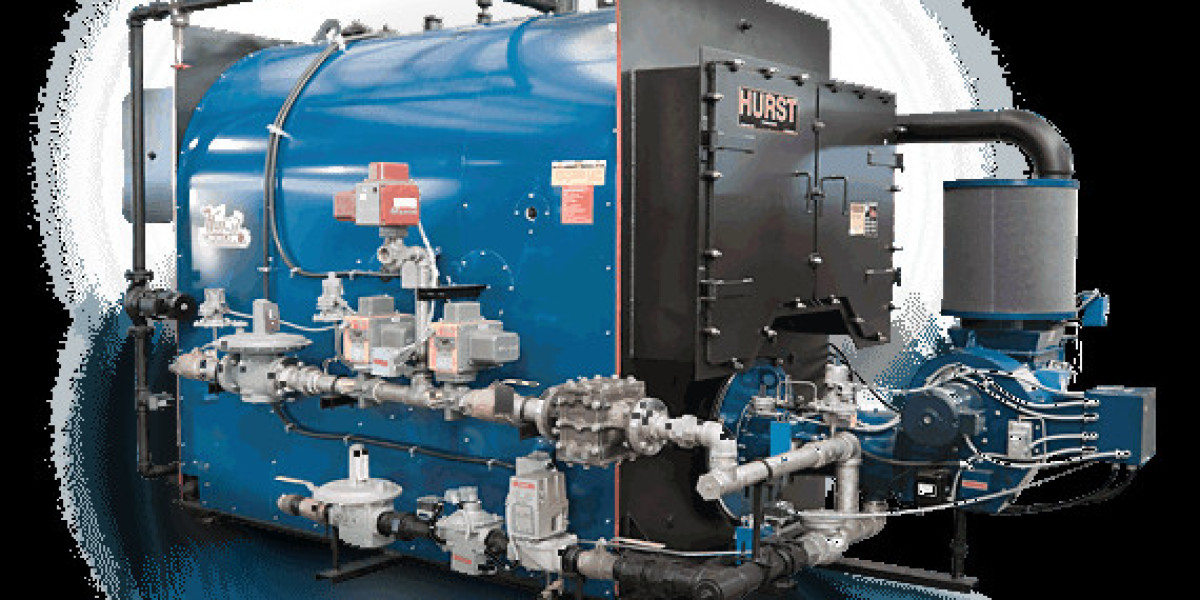

Scotch marine boilers have been a cornerstone of maritime engineering since the 19th century, offering reliable steam generation for ships and industrial applications.
Their compact design and efficient performance made them a standard choice for marine vessels, especially steamships, and later found applications in various industrial settings.
Over the years, advancements in their design and materials have further enhanced their efficiency, durability, and versatility, ensuring their relevance in modern engineering.
In this article, we explore the evolution of Scotch marine boilers, their core design features, and the advancements that have allowed them to remain an essential part of maritime and industrial operations.
The Basics of Scotch Marine Boilers
A Scotch marine boiler is a fire-tube boiler, which means that hot gases pass through tubes immersed in water, heating it to produce steam.
The defining characteristic of these boilers is their compact, cylindrical design, which fits into the hull of a ship, making them highly space-efficient.
The traditional Scotch marine boiler consists of a large cylindrical shell containing water and a series of fire tubes. The heat from burning fuel, usually oil or coal, is directed through these tubes, transferring heat to the water surrounding them, thus generating steam.
This steam is then used to power engines or turbines.
Key features include:
Compact size: Ideal for marine applications where space is limited.
High efficiency: Due to the large heating surface area provided by the fire tubes.
Durability: Thick boiler plates and high-quality materials make these boilers long-lasting.
Advancements in Scotch Marine Boiler Design
Although the basic design of Scotch marine boilers has remained unchanged since the late 1800s, significant technological advancements have improved their efficiency, safety, and adaptability.
Material Innovations: Modern Scotch marine boilers benefit from advancements in metallurgy. Stronger, more heat-resistant alloys allow the boiler to operate at higher pressures and temperatures, increasing overall efficiency.
These materials are also more corrosion-resistant, reducing maintenance requirements and extending the lifespan of the boilers.
Automation and Control Systems: Older boilers required constant manual supervision to maintain safe and efficient operation. Today, advanced automation systems monitor key parameters such as water levels, pressure, and temperature.
These systems can automatically adjust fuel input, airflow, and steam production, improving overall safety and performance. In industrial applications, these controls also help optimize fuel usage, reducing operational costs.
Fuel Efficiency Enhancements: Early Scotch marine boilers primarily used coal, which was bulky and inefficient by modern standards. Over time, the shift to liquid fuels like oil, and now even natural gas, has dramatically improved the fuel efficiency of these boilers.
Additionally, advancements in burner technology allow more complete combustion of fuel, resulting in higher heat output and lower emissions.
Environmental Considerations: Modern Scotch marine boilers have been adapted to meet stringent environmental regulations. Features such as low-NOx burners and exhaust gas recirculation systems minimize harmful emissions.
In industries, the ability to use alternative fuels, including biofuels and waste gases, has made Scotch boilers more environmentally friendly, contributing to the global effort to reduce carbon footprints.
Adaptability to Different Applications: While primarily associated with maritime uses, Scotch marine boilers have also found their way into land-based industries. Their compact and efficient design makes them ideal for use in power plants, refineries, and manufacturing facilities where steam is required for various processes.
The ability to scale these boilers for different steam outputs has broadened their range of applications.
Applications in Modern Industries
Maritime Use: Scotch marine boilers remain a fixture on many ships, particularly in older or heritage vessels. They continue to serve in marine transport, particularly in auxiliary roles such as heating or providing steam for smaller turbines. Some modern vessels still use Scotch boilers in combination with other systems due to their reliability.
Power Generation: In industries, Scotch marine boilers play a significant role in generating steam for power turbines. Industrial plants that require steam for heating, mechanical power, or electricity generation often opt for these boilers because of their high efficiency and reliability, especially in smaller-scale operations.
Refineries and Chemical Processing: Refineries, chemical processing plants, and similar industries use Scotch marine boilers to produce steam for various chemical reactions and processes. Their ability to produce high-pressure steam reliably makes them indispensable in these fields.
Historical and Heritage Applications: Many steam-powered vessels and historic factories preserve Scotch marine boilers in their original form, maintaining them for operational demonstrations or as museum pieces. These boilers continue to represent a vital part of engineering history.
Scotch marine boilers, while rooted in 19th-century technology, have undergone numerous advancements that keep them relevant in modern maritime and industrial applications. Innovations in materials, automation, and fuel efficiency have significantly improved their performance, making them more environmentally friendly and versatile across different industries.
As a result, these robust and efficient boilers remain a critical component of both historical and contemporary engineering landscapes.
As the world continues to focus on improving efficiency and reducing environmental impacts, further advancements in Scotch marine boilers are likely to emerge, ensuring their continued use in the decades to come.